The typical American consumer hits the grocery store at least twice a week. Why, then, does it feel like we never have anything to eat at home? Follow the advice below to make sure you not only have a well-stocked pantry for healthful eating, but are buying the right products at the right time in the right way. One of the things I like to do before even setting foot in the store is evaluate what I have in the fridge, pantry & freezer to use for meals that week. While doing that I like to
clean out any "old" or "unhealthy" stuff that is in there. Starting "fresh" each week with a clean refrigerator helps ME.
1. Rule number one: Buy fresh food! There is no simpler, no easier, no plainer measure of the healthiness of your food than whether it comes in boxes and cans or is fresh from the farm or the fields. If more than half your groceries are prepared foods, then you need to evolve your cooking and eating habits back to the healthy side by picking up more fresh vegetables, fruits, seafood, juices, and dairy.
2. Shop the perimeter of the store. That's where all the fresh foods are. The less you find yourself in the central aisles of the grocery store, the healthier your shopping trip will be. Make it a habit -- work the perimeter of the store for the bulk of your groceries, then dip into the aisles for staples that you know you need.
3. Plan your meals. Use your
Feed ME meal planner pad. Look through your fridge, pantry & freezer & see what you have left that you can use for meals during the upcoming week. You can type a few ingredients into google and it will produce a variety of recipes you could make from those products on hand. Planning your meals out in advance keeps your grocery costs down and helps you avoid take out food during the week.
 4. Shop with a list.
 Use your
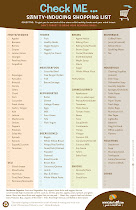
Check ME grocery shopping list. Organize your shopping list based on the tip above -- that is, by the sections of the store. This will have you out of the supermarket at the speed of light. By keeping yourself to the discipline of a well-planned shopping list, you can resist the seductive call of aisle upon aisle of crappy junk food, thereby saving your home, your family, and yourself from an overload of empty calories.
 5. Food-shop with a full stomach.
 We're sure you've heard this one before, but it's worth repeating. Walking through the grocery store with your tummy growling can make you vulnerable to buying things you shouldn't. If you can't arrange to shop shortly after a meal, be sure to eat an apple and drink a large glass of water before heading into the store.
6. Buy a few days before ripe. There's no point in trying to buy fresh vegetables and fruits for your family if the bananas turn brown and the peaches mushy two days after you get them home. Buy fruit that's still a day or two behind ripeness. It will still be hard to the touch; bananas will be green. Feel carefully for bruises on apples, check expiration dates on bagged produce, and stay away from potatoes or onions that have started to sprout. If the produce on the shelves looks a bit beyond its peak, don't walk away; ask to speak to the produce manager. Chances are, there's a fresh shipment in the back just waiting to be put out on store shelves. For a real taste treat, if you're going to eat them within the next couple of days, pick up a bunch of vine-ripened tomatoes. There's just no comparison.
7. Buy in season. Sure, it's tempting to buy strawberries in December, and once in a while that's fine. But fresh fruit and vegetables are best when purchased in
season, meaning they've come from relatively close to home.
8. Buy organic whenever possible. Sure, it costs a few dollars more. But a study in the
Journal of Agricultural and Food Chemistry found that organically grown fruits and vegetables contain higher levels of cancer-fighting antioxidants than conventionally produced foods.
9. Buy frozen. Frozen fruits and vegetables are often flash frozen at the source, locking in nutrients in a way fresh or canned can't compete with. Stock your freezer with bags of frozen vegetables and fruits. You can toss the veggies into soups and stews, microwave them for a side dish with dinners, or thaw them at room temperature and dip them into low-fat salad dressing for snacks. Use the fruits for desserts, smoothies, and as yogurt toppings.
10. Stock up on canned tomato products & beans. Here's one major exception to the "fresher is better" rule. Studies find that tomato sauces and crushed and stewed tomatoes have higher amounts of the antioxidant lycopene than fresh, because they're concentrated. Canned tomatoes are a godsend when it comes to quick dinners in the kitchen. Warm up a can with some crushed garlic for a chunky pasta sauce; pour a can over chicken breasts and simmer in the crock pot; add to stews and sauces for flavor and extra nutrients.
Beans can be mixed with brown rice, added to soups and stews, pureed with onions and garlic into hummus for dipping, or served over pasta for a traditional pasta e fagioli.
11. Avoid products containing: Aspartame, Acesulfame K, Dextrose, Evaporated cane juice, High fructose corn syrup, Hydrolyzed protein, Maltose, MSG, Niacin, Partially hydrogenated soy bean oil, Sucralose. Thanks Shane for that list!
So what are you all cookin' up this week?